
Metamora Films Journal
A Different Kind of Justice: Human-Centered Leadership Behind Prison Walls

What changes when the people leading an institution begin by recognizing the humanity of everyone inside it? A Different Kind of Justice, from Humans First Productions, explores that question through the work of former prison warden Jackie Crawford.
The documentary looks at leadership in a setting where trust can be difficult to establish and the consequences of a harmful culture are deeply felt. Its relevance, however, reaches beyond prison walls.
On October 23, 2026, Connecting 4 Justice International organized a Zoom watch party hosted by Dara Barlin. Metamora Films founder Matt Duhamel joined as an invited participant in the discussion alongside other attendees and organizations.
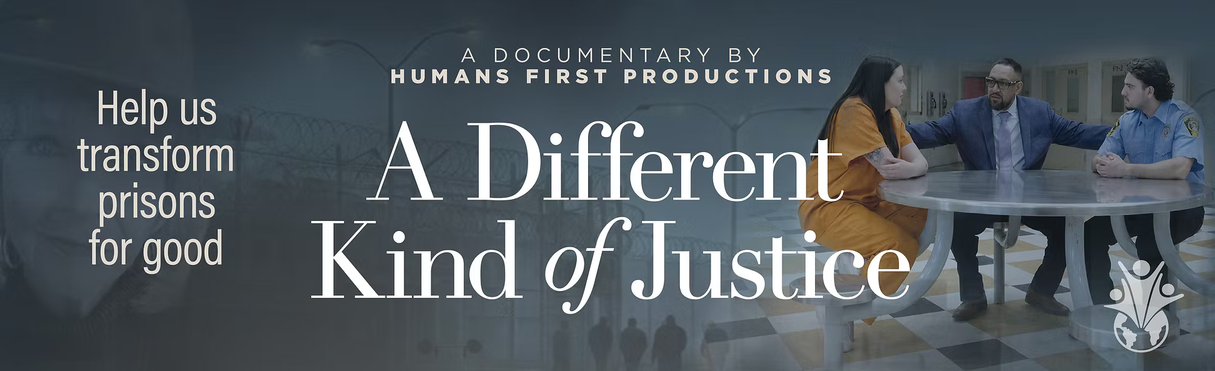
Watch the A Different Kind of Justice trailer
A prison story with a broader question
According to the filmmakers’ synopsis, Crawford’s approach centers on psychological safety for correctional officers and incarcerated people. The film presents her work as an example of how changing institutional culture can help reduce conflict and build trust.
During the watch-party discussion, Barlin emphasized that the film’s central concern is human-centered leadership: what happens when those practices are present, and what happens when they are missing. Prisons provide the setting, but the questions extend to other workplaces, public institutions, and communities.
Who feels safe asking for help? Whose perspective gets heard? How do leaders respond when someone makes a mistake? Those everyday decisions help define what an organization feels like to the people within it.

Humans First Productions: a mission beyond the screen
Humans First Productions brings together filmmakers, educators, practitioners, advocates, and policy makers interested in improving the justice system and public institutions through storytelling. Its mission connects film with changes in how institutions treat the people they employ and serve.
The organization advocates moving away from management built around fear and compliance toward practices that support participation, empathy, and trust. Its screenings create opportunities to discuss what those changes might look like in practice.

Dara Barlin
Barlin is an author, organizer, and filmmaker whose work explores how institutions can become more responsive to people. Her book, A New Kind of Power, examines transforming government culture through greater empathy and effectiveness.
As host of the screening, she helped connect the documentary’s story with its broader questions about leadership.
Six elements of human-centered leadership
Humans First Productions’ human-centered leadership framework offers a practical vocabulary for that conversation. Its six elements address both how decisions are made and how people experience their daily environment.
1. Psychological safety
People can raise concerns, ask for support, and acknowledge mistakes without fearing retaliation.
2. Collective decision-making and action
People throughout an organization have a voice and opportunities to contribute to decisions and lead change.
3. Appreciation culture
Leaders recognize effort and progress, helping people feel that their contributions matter.
4. Continuous improvement
Organizations try manageable changes, listen to community feedback, and refine ideas before expanding them.
5. Feedback for growth
Giving and receiving feedback becomes a way to build understanding and improve, rather than catch someone out.
6. Well-being
The physical and mental health of staff and the people they serve becomes an organizational priority.
Recognizing the pressure on both sides
For Duhamel, who brings his own experience of incarceration to the conversation, one takeaway was the importance of recognizing pressures that can become invisible across institutional roles.
Incarcerated people may not always see the strain correctional officers and wardens are under. Staff, in turn, may lose sight of the stress, uncertainty, and vulnerability experienced by people in their custody.
The film prompted him to think about how people can mirror or react to the behavior around them. When interactions become hostile, defensive responses may deepen the tension. Recognizing that possibility raises a question for leaders: how can they interrupt the pattern?
That reflection does not erase differences in power. Correctional leaders and staff have authority over conditions that incarcerated people cannot simply leave. Recognizing everyone’s humanity goes hand in hand with recognizing that responsibility.
Human-centered leadership meets human-centered storytelling
Humans First Productions’ emphasis on leadership connects with Metamora Films’ commitment to human-centered storytelling. Both approaches ask us to look beyond a label or role and pay attention to the person, their experiences, and the pressures shaping their life.
For Metamora, participating in this discussion was an opportunity to listen and consider how documentary film can make room for a more thoughtful conversation.
Keep the conversation going
A screening offers a starting point for asking what these ideas could mean close to home. Where do people hesitate to speak? How is feedback handled? What would help staff and community members feel heard?
Humans First Productions invites people to organize watch parties in homes, community spaces, universities, and institutions. Its host resources include a free film link and a guide for discussion afterward. Small gatherings are welcome, too.
Bring A Different Kind of Justice to your community
Host a watch party to explore the film’s ideas with others, or make a donation to support the work of Humans First Productions.